Top 5 Fortnite V-Bucks Scams: What Parents Need to Know
V-Bucks scam generators, discount stores, phishing, malicious apps and triangulation fraud

Fortnite’s virtual currency, V-Bucks, continues to be a prime target for scammers, especially given the game’s massive popularity among young players. As of 2025, reports indicate that these scams evolve but often rely on luring kids with promises of free or cheap in-game items. Below, we explore the top five common scams, each with a detailed explanation. Following that, we’ll cover essential prevention strategies for parents to safeguard their children and finances.
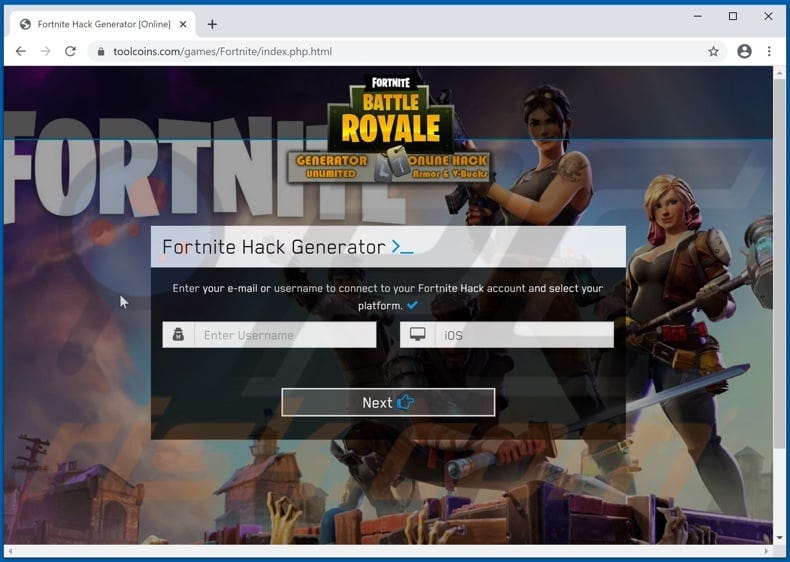
1. Free V-Bucks Generators
Free V-Bucks generators are among the most prevalent scams, where fraudulent websites or tools promise unlimited V-Bucks without cost, typically requiring users to complete surveys, watch ads, or input their Fortnite account credentials. These sites mimic official Fortnite interfaces to appear legitimate but ultimately aim to steal personal information, install malware, or harvest data for identity theft. No genuine V-Bucks generators exist, as Epic Games does not support such methods, and falling for them can lead to account compromise or financial loss through linked payment details. Young gamers are particularly vulnerable, often sharing these links on social platforms, amplifying the scam’s reach.
2. Fake V-Bucks Discount Stores
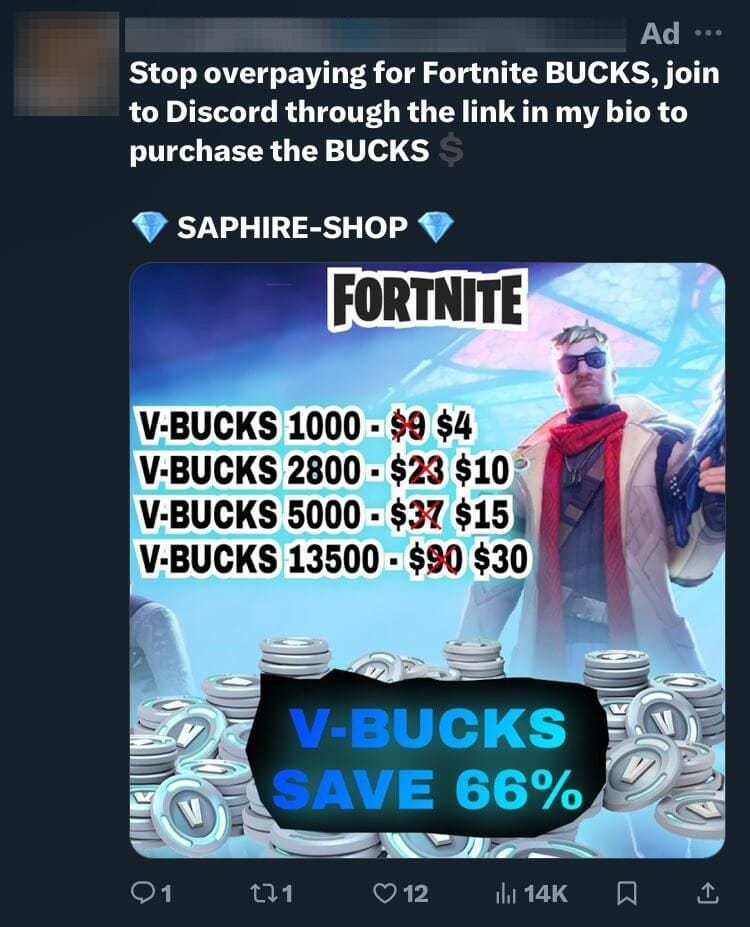
Scammers create bogus online stores that imitate Epic Games’ official site, offering V-Bucks at massive discounts or in exclusive bundles not available through legitimate channels. Users are prompted to enter payment information, but instead of receiving currency, their credit card details are stolen, leading to unauthorized charges. These fake domains often use similar URLs, fonts, and designs to deceive players, and they may also collect login credentials for further exploitation. This scam preys on the desire for deals, especially during in-game events, resulting in empty wallets and revoked purchases if detected by Epic.
3. Phishing via Social Media and Videos
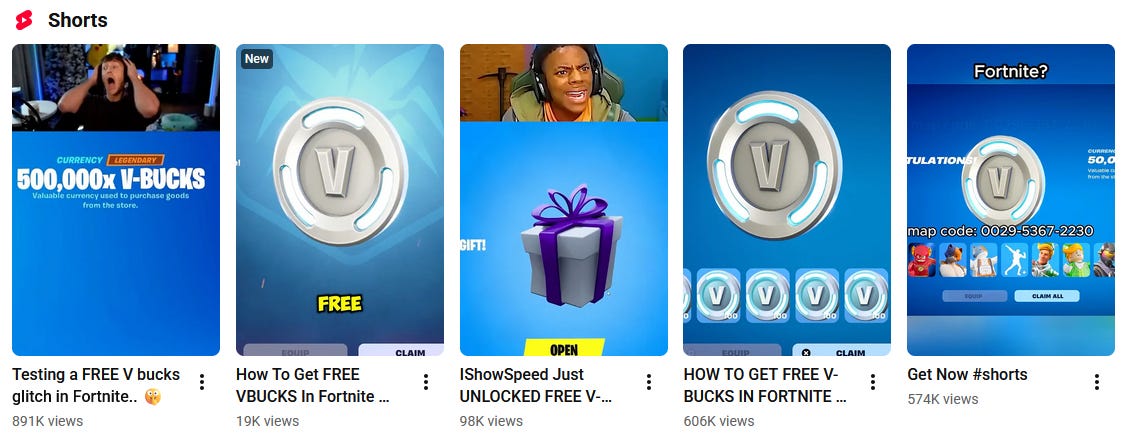
Phishing scams proliferate on platforms like YouTube, X (formerly Twitter), and Reddit, where scammers post videos or links promising free V-Bucks through giveaways, tutorials, or “hacks.” Clicking these leads to malicious sites that request account details or prompt downloads of spyware. Fake YouTube channels with high view counts add credibility, tricking kids into sharing the content to “unlock” rewards, which spreads the scam further. Social engineering elements, like in-game “friends” offering help with transfers, often result in account takeovers and access to linked emails or cards.
4. Fake Fortnite Apps
Bogus mobile apps, disguised as official Fortnite tools or V-Bucks enhancers, are distributed outside app stores like Google Play, especially since Epic initially avoided it for Android. These apps promise easy V-Bucks but instead deliver adware, malware, or data thieves that compromise devices and steal information. Users might encounter them via social media ads or search results, leading to infected phones and potential financial data breaches. This scam exploits the game’s mobile popularity, with kids downloading them impulsively without verifying sources.
5. Triangulation and Account Trading Frauds
In triangulation scams, fraudsters use stolen credit cards to buy V-Bucks on legitimate accounts, then sell or trade those accounts— often loaded with rare items— at discounted prices on underground markets. Buyers risk having the V-Bucks revoked by Epic when the fraud is detected, or facing account bans. Account trading also involves scams where “sellers” promise loaded profiles but deliver nothing after payment, or use the transaction to phish for more details. This affects parents indirectly through unauthorized charges or kids losing access to their progress.
How Parents Can Prevent Their Kids from Getting Scammed
Parents play a crucial role in protecting young gamers from these threats. Start by educating children about online dangers:
Explain that offers for free or discounted V-Bucks are always scams, and teach them to question suspicious sites or requests for personal info.
Insist on using only official platforms like EpicGames.com, PlayStation, or Xbox for purchases, and bookmark these to avoid fake domains— always double-check URLs for subtle differences.
Enable two-factor authentication (2FA) on Fortnite accounts via an authenticator app or email to prevent unauthorized access.
Utilize parental controls on gaming consoles and devices to limit in-app purchases, restrict interactions with strangers, and monitor activity.
Regularly review credit card statements for unusual charges, and keep email addresses private to dodge phishing attempts.
Finally, encourage open communication so kids feel comfortable reporting sketchy encounters, and consider using V-Bucks as a teaching tool for managing digital currency responsibly. By staying vigilant, parents can help ensure safe gaming experiences.